Sony Unveils the SRH-S1: A Premium XR Headset Competing with Apple’s Vision Pro
Sony, a leading name in virtual reality (VR) gaming, is now venturing into the world of extended reality (XR) with its high-end SRH-S1 headset.
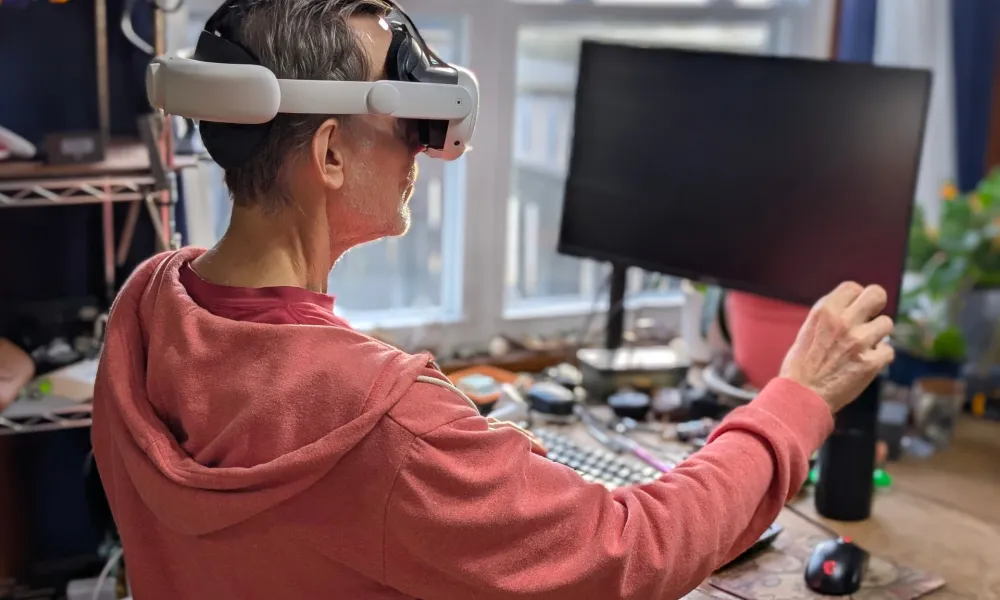
Sony, a leading name in virtual reality (VR) gaming, is now venturing into the world of extended reality (XR) with its high-end SRH-S1 headset. Known for its widely popular PlayStation VR2, the tech giant is stepping up its game with a product that directly competes with the Apple Vision Pro. While the SRH-S1 is not part of Sony’s PlayStation VR lineup nor powered by Google’s Android XR, it stands out as an enterprise-focused device aimed at professionals involved in product design and other immersive applications.
The Sony SRH-S1 is priced at an eye-watering $4,750, positioning it as an ultra-premium product that surpasses even the high-end Apple Vision Pro in terms of cost. This price point reflects the headset’s advanced hardware and software integration, tailored for enterprise use rather than consumer gaming or entertainment.
A Revolutionary Design for Enterprise Use
The SRH-S1 headset is designed to cater specifically to professionals, with unique features that differentiate it from other headsets on the market. It integrates both hardware and software seamlessly, ensuring a smooth user experience. The headset boasts a flip-up visor, which allows users to easily switch between virtual and physical environments, making it ideal for face-to-face conversations without the need to remove the device.
One of the standout features of the SRH-S1 is its halo strap design. Unlike other headsets that may exert pressure on the face, this design eliminates all facial discomfort, ensuring a more comfortable experience during extended usage. Additionally, the headset includes controllers optimized for manipulating virtual 3D objects, providing an enhanced experience for designers and engineers who rely on precision in their work. One of the controllers even features a ring on the finger, enabling users to grasp virtual items seamlessly. A 3D stylus, which looks like something straight out of a sci-fi movie, offers precise adjustments, making the headset a powerful tool for professionals working in design and product development.
Cutting-Edge Specifications to Rival Apple’s Vision Pro
When it comes to specifications, the Sony SRH-S1 doesn’t hold back. It features 4K microOLED panels for each eye, ensuring exceptional display quality. This level of resolution makes it one of the best headsets on the market in terms of visual fidelity. Additionally, the SRH-S1 includes full-color passthrough technology, allowing users to see their real-world surroundings without having to remove the headset. This feature is particularly useful for those who need to switch between virtual and physical environments frequently, ensuring a smooth workflow.
To further enhance the user experience, the SRH-S1 is equipped with head, hand, and eye tracking, providing intuitive control. These sensors enable users to interact with the virtual world naturally, making it easier to manipulate objects and navigate through the digital space. Whether used as a standalone device or connected to a computer for more processing power, the SRH-S1 offers flexibility for a range of professional applications.
A Premium Product with Enterprise Focus
The Sony SRH-S1 is clearly targeted at enterprise customers, particularly those in industries like product design, architecture, and engineering. It isn’t designed for the general consumer, but rather for professionals who require a powerful XR headset to enhance their workflows and bring their designs to life in immersive environments. The headset’s price tag reflects its enterprise-oriented features, as it offers a level of quality and functionality that’s hard to match in the consumer market.
Although the SRH-S1 is positioned as a high-end tool for professionals, it may have broader implications for the XR industry as a whole. As more and more companies look to integrate XR technologies into their operations, products like the SRH-S1 could play a pivotal role in shaping the future of immersive design and product development. With features like 3D stylus control and advanced hand tracking, Sony is positioning the SRH-S1 as one of the most sophisticated tools available for virtual design work.
Availability and Shipping
While the SRH-S1 has been in development for some time, the official release date for the headset is January 23, 2025. Siemens, the company behind the NX Immersive Designer CAD software, will be the exclusive distributor for the headset, offering it to enterprise customers who can benefit from its high-end capabilities. The shipping of the SRH-S1 is expected to begin in February 2025, giving early adopters a chance to get their hands on the device and begin integrating it into their work.
The Future of XR: Gaming, Computing, and Beyond
While the Sony SRH-S1 is clearly focused on enterprise applications, the launch of this headset signals an exciting future for XR technologies across various industries. In 2025, we are likely to see an influx of new XR headsets that aim to capture attention not only for their professional applications but also for immersive gaming, virtual tourism, and general computing. With the ability to experience virtual environments in ways that were once only imagined, XR headsets like the SRH-S1 could soon become a mainstay in industries that rely on cutting-edge technology.
As the XR landscape continues to evolve, it will be interesting to see how companies like Sony and Apple shape the future of this technology. Whether for professional use, immersive entertainment, or general computing, 2025 is shaping up to be a pivotal year for XR, with devices like the Sony SRH-S1 leading the way in terms of innovation and functionality. For those in enterprise fields, the SRH-S1 represents a leap forward in immersive design, and its high-end features make it a compelling option for professionals seeking the best in XR technology.